Climate change conspiracy theories

Photo credit: CORBIS/Joseph Sohm; ChromoSohm Inc.

In 2010, politicians from the Utah House of Representatives urged the United States Environmental Protection Agency to immediately suspend policies aiming to reduce carbon dioxide emissions. Why? Global climate change, the politicians argued, is a fraud. According to the Utah Representatives, the apparent scientific consensus around anthropogenic climate warming is the product of  a consortium of scientists who manipulate data, subvert the peer-review process, and attempt to bully the small minority of dissenting scientists into silence. Faking empirical support for global warming allows these “climate change alarmists” to ride “the climate change ‘gravy train'”. And so, rather than take steps to protect public health and the future of the planet by reducing carbon dioxide emissions, the Utah politicians called instead for an “investigation of the climate data conspiracy.”

Continue reading

Posted in Personality, What's the harm | Tagged , , , , | 13 Comments

Conspiracy Round-Up 19/01/13

Alex Jones Links to a few recent conspiracy-oriented stories from around the internet. Unsurprisingly, the major topic of conspiracy theorising over the past few weeks has been the Newtown shooting; conspiracy theories arose immediately after the tragedy and are still gaining strength. We’ve discussed the psychology of these kinds of theories here on the blog too – see these posts by myself, Mike, and Christopher.

Have I missed a good story? Let me know in the comments.

Posted in Round-Ups | Tagged , , , , , , , , | Leave a comment

Alex Jones and the “Monological Belief System”


In the recent weeks following the tragedy of the Sandy Hook shooting, we have seen many different viewpoints expressed regarding the fiercely debated issue of US gun control. In particular, one of the most controversial and volatile interviews came from CNN’s Piers Morgan, who invited conservative conspiracy theorist Alex Jones to discuss gun control, and a petition to get Morgan deported from the US for attacking the 2nd Amendment.

The interview revealed some interesting insight into the types of conspiracy that Jones propagates. As one of the (self-proclaimed) founders of the 9/11 truth movement, Jones broadcasts a radio show syndicated to over 100 stations across the US, and boasts over a million and a half listeners. In his show and associated website, infowars.com, he discusses a vast array of theories ranging from governments tracking citizens with microchips and raw milk controversies, to Bin Laden’s faked assassination and more traditional 9/11 conspiracies.

Watching the interview, it demonstrated how often political and conspiracy ideology overlap, and it could be argued that conspiratorial ideas are a form of political process, especially from those who consider themselves alienated or deserted by the traditional political methods. Consider the ‘Birther’ movement that suggests Barack Obama was not born in the US and thus cannot legally assume the position of President. People unhappy with the original political outcome (the election) could feel exposed or betrayed, and thus turn to alternatives. This also helps to explain why a substantial amount of conspiracies have government at their heart, with their participation (or inaction) key to many of the world’s injustices.

In the fifteen minutes Jones has on air with Morgan, we see a perfect example of what psychologists have termed a ‘monological belief system’. This is the where an individual can build and maintain a view of the world that is ruled by conspiracies, they are seen everywhere and anywhere, and explain many of the surprising, uncontrollable, or deadly events that happen. As this system develops, people become closed-off and reluctant to believe in alternative explanations, spotting conspiracies in increasing amounts of events and situations.

This system has been demonstrated by research that suggests that belief in one particular conspiracy theory strongly predicts belief in others, even unrelated or contradictory ones. These views are not driven necessarily by theories supporting each other, but instead a general overarching belief that supports conspiracy in general.

With this belief, it is not necessarily the specifics of a conspiracy that are important (often in sensitive cases such as mass shootings conspiracists “just ask questions”), but the fact that the perpetrators are lying, covering up, or misleading the public. This motivation to uncover deception leads to performances such as Jones’, who in his interview mentions between 8 and 12 distinct conspiracies, not all overlapping. These include:

a.    Megabanks either control the world already or are about to seize control in order to enact global tyranny
b.    Loose theories around large media groups controlling what is revealed to the public, including the Bloomberg group /AP/Reuters
c.     US Government plans to oppress the people once guns are removed
d.    Prozac and other ‘Mass murder/suicide pills’ responsible for mass shootings
e.    The UK as a police state
f.     Morgan (and others at CNN) are ‘Hatchet men’ of the NWO
g.    First person shooter style video games responsible for mass shootings
h.    Most of the recent mass shootings are false flag events setup by  government to control the population
i.      More specific conspiracies surrounding Building 7 (WTC attacks)
j.      “Criminal elements of the military-industry complex” responsible for 9/11
k.    Other general false flag conspiracies through history including Gulf of Tonkin, Operation Gladio and the Reichstag fire.

American politics in particular suffers from a underlying amount of paranoia, and Mike in his recent article discussed how any mass shooting is politicised by default because of the thorny issue of gun control. The leap, however, in taking a set of tragic shocking circumstances, and maintaining that it was orchestrated for a more sinister purpose, is difficult for some to comprehend.

Posted in Social psychology, World events | Tagged , , , , , , , , , | 21 Comments

The psychology of conspiracy theories: CSRfm’s brain bites podcast, with Dan Jolley & Mike Wood

On Tuesday 11th December 2012, Mike and I recorded a radio interview for CSRfm‘s Brain Bites show, based on the psychology of conspiracy theories.

You can listen to the podcast of the show here:

Posted in Events | Tagged , | 6 Comments

Mass shooting conspiracy theories: Newtown, competence, and politics

As the conspiracy theories around the mass shooting in Newtown, Connecticut continue to grow, Rob’s insightful post from a couple of days ago has generated a lot of interest. We can talk about evidence or lack of evidence as much as we like, but ultimately, as with other mass killings like the Aurora shooting and Norway massacre, some people will accept the mainstream account and others will reject it in favour of a conspiracy theory. What determines whether someone thinks that there’s a conspiracy behind a mass shooting or not?

This is a very complex question, but one way to approach it is this: why don’t more people think that James Wenneker von Brunn and Floyd Lee Corkins II were set up by a conspiracy?

Continue reading

Posted in Social psychology, World events | Tagged , , , | 11 Comments

Debating the 2012 apocalypse

I was recently in a debate about what’s going to happen on December 21st, 2012, with a few interesting folks, including Richard Hoagland, who unfortunately dropped the call early on. Have a watch…


Posted in Uncategorized | Tagged , , , | Leave a comment

Conspiracy theorising in the wake of the Newtown shooting

On December 14th, 2012, 26 people, most of them young children, were killed in a shooting spree at Sandy Hook elementary school in Newtown, Connecticut. Unconfirmed rumours about the identity and motives of the person responsible immediately began to be passed around, and later retracted, by the news media; however, as I write this, police are still trying to piece together exactly how the tragedy came to happen. It will likely be some time before the relevant authorities are able to gather and verify all the facts, and make the details available to the public.

For some conspiracy theorists, though, no further explanation is needed. They already know what caused the shooting: It was the U.S. government – the same government which, they say, was behind other horrific shootings such as those at Columbine High School, Virginia Tech, a cinema in Aurora, Colorado, a Sikh Temple in Wisconsin, and a shopping mall in Oregon. For these conspiracy theorists, the shooting in Newtown is just the latest in a long line of false-flag operations staged by people within the government as a ruse to justify taking away the 2nd Amendment right to bear arms. Within hours of the Newtown shooting articles appeared on professional conspiracy theorist Alex Jones’ website insinuating that the shooter (or more likely multiple gunmen) could be a government patsy under the influence of mind control, and accusing President Obama of faking tears during a press conference. Elsewhere, theorists saw the correcting of unconfirmed rumours in the media as evidence of a cover-up, and even hinted that chem-trails seen over Connecticut may somehow have played a role in the events.

This shows the conspiracist mindset in action. People who endorse one conspiracy theory tend to buy into many others – including theories with no logical connection and, as Mike Wood and colleagues demonstrated, occasionally even theories which directly contradict each other. This suggests that at least some people come to believe conspiracy theories not through rational and impartial evaluation of the evidence supporting each claim, but rather because they have an overarching worldview in which conspiracy is the default explanation for any event or observation. This is why even in the minutes and hours immediately after an event, when few facts can be known for sure, some people will already be convinced that the answer is conspiracy.

We all have a strong and emotional reaction to shocking events like the murders in Newtown. For some people this reaction is to instantly jump to the conclusion that it was a conspiracy. The rest of us can get on with grieving the loss of innocent lives, figuring out what happened, and discussing what can be done to prevent senseless tragedies like this from happening again.

Posted in World events | Tagged , , , , , | 15 Comments

The influence of conspiracy information: Beliefs & Intentions

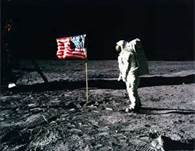
Conspiracy theories are influential. Empirical work, both of my own and other scholars have indeed shown that this is the case. Whilst watching “Did we land on the moon” on channel 5 last night, I therefore wondered what influence this documentary could have on someone’s beliefs about the moon landing, since it appeared to be very pro-conspiracy focused. For example,  a series of studies co-authored by Karen Douglas and myself, which are due to be published in the British Journal of Psychology, have shown that after exposure to pro-conspiracy information (i.e., information that supports conspiracy theories concerning governmental or climate change conspiracies) participants were more likely to endorse a variety of conspiracy theories (i.e., 9/11, Diana etc.), relative to those who were exposed to anti-conspiracy information, or who were in a control condition. Furthermore, it was demonstrated that this exposure can also influence a person’s behavioural intentions – specifically being detrimental for intentions concerning political engagement and environmental campaigns. Therefore, this research reveals that exposure to conspiracy theories can have potentially important social consequence.

moon

Furthermore, previous empirical research has demonstrated a similar trend. Douglas and Sutton (2008) exposed participants to conspiracy theories about the death of Princess Diana. They found that participants were then more inclined to endorse conspiracy theories, even though they perceived that their beliefs had not changed. That is, they rated the beliefs in others being influenced by the conspiracy information, but not their own beliefs. These findings therefore demonstrate that conspiracy theories can have a ‘hidden impact’ (p.217) on people’s attitude. Another empirical example is from research conducted by Butler, Koopman and Zimbardo (1995), where they found that people who had viewed the film JFK, which documents several conspiracy theories, were more likely to believe JFK conspiracies, relative to those who had not viewed the film.

vote

From these brief empirical examples, this demonstrates that some wariness about conspiracy theories may indeed be warranted. This relates to both the serious behavioural intentions being influenced, but also one’s attitudes concerning significant events. Therefore, whilst watching the documentary last night, I wondered about how far this could be influencing the viewers’ beliefs on the moon landing. Further, I wondered whether they were even aware that their beliefs may have even been influenced, and subsequently potentially their behavioural intentions too. Conspiracy theories are a fascinating topic, but wariness needs to be taken when being exposed to such pro-conspiracy information in the absence of information supporting mainstream accounts.

References

Butler, L. D., Koopman, C., & Zimbardo, P. G. (1995). The psychological impact of viewing the film JFK: Emotions, beliefs and political behavioral intentions. Political Psychology, 16, 237–257. doi:10.2307/3791831

Douglas, K. M., & Sutton, R. M. (2011). Does it take one to know one? Endorsement of conspiracy theories is influenced by personal willingness to conspire. British Journal of Social Psychology, 50, 544–552. doi:10.1111/j.2044-8309.2010.02018.x

Jolley, D. & Douglas, K.M. (2013). The social consequences of conspiracism: Exposure to conspiracy theories decreases intentions to engage in politics and to reduce one’s carbon footprint. British Journal of Psychology. doi: 10.1111/bjop.12018

Posted in Events, Social psychology | Tagged , , , , , , | 21 Comments

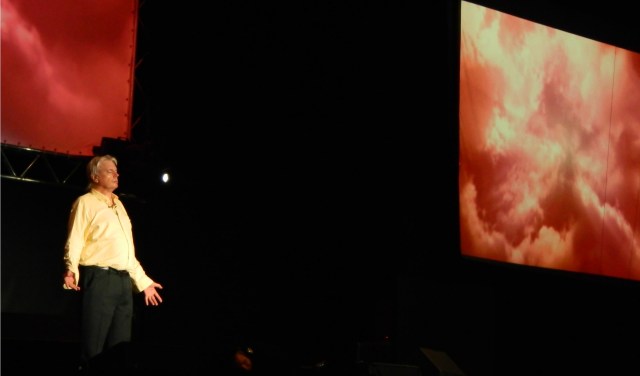
A day with David Icke: Remember Who You Are, Wembley Arena October 27, 2012 review

David Icke, Wembley Arena 2012

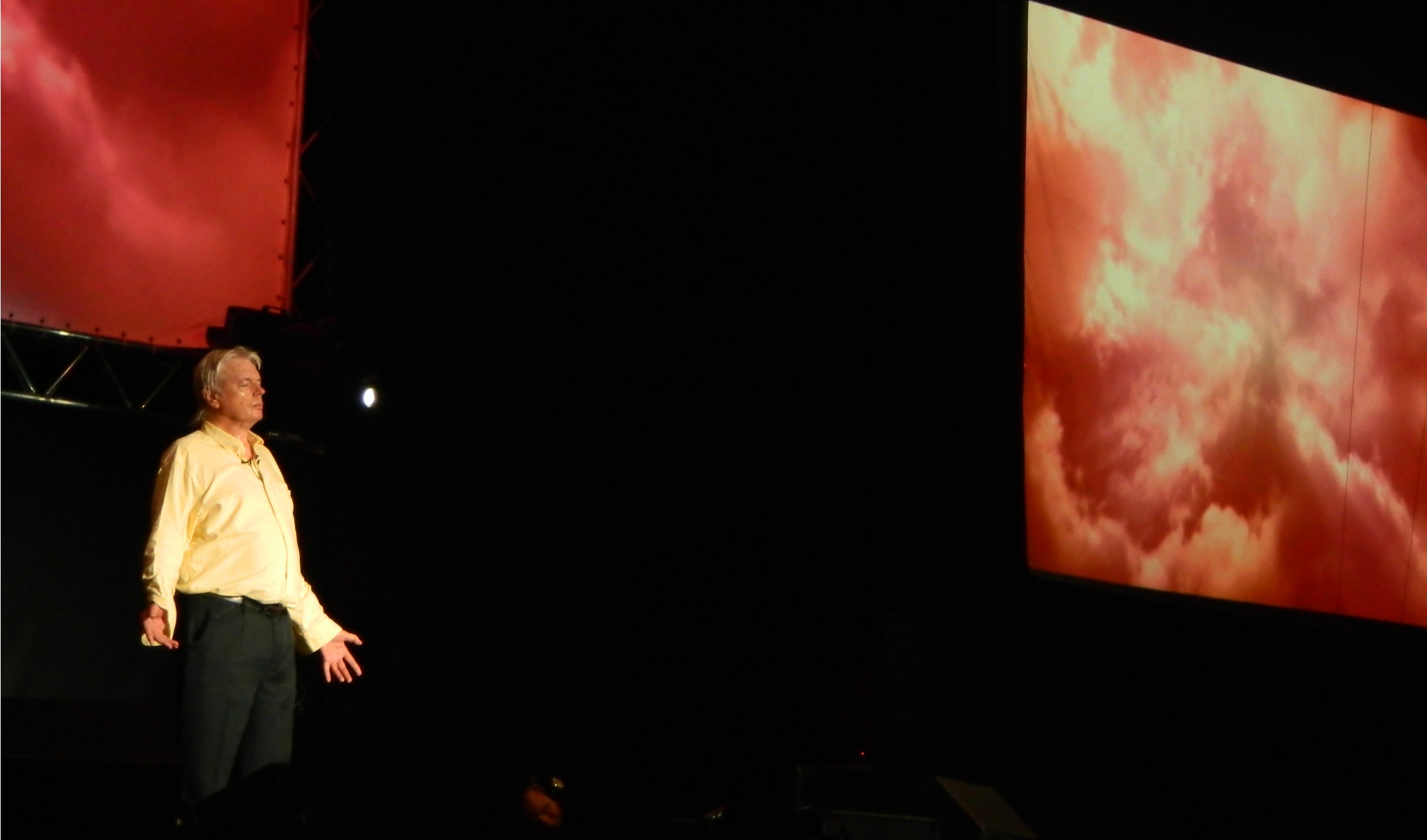
A few Saturdays ago Mike, myself, and around 5,000 other ticket-holders had the opportunity to attend David Icke’s biggest event to date: a sold out 10-hour lecture at London’s Wembley Arena titled ‘Remember Who You Are’. David Icke, for those not familiar with him, was a well-known British sports presenter, until in 1991 he declared himself the “son of the Godhead” and started making predictions about the end of the world. Since then he has pursued a career as a writer and public speaker, detailing his beliefs about an insidious conspiracy perpetrated by sinister reptilian humanoids. I confess I haven’t gotten around to reading Icke’s extensive back-catalogue so I was excited to hear his theories straight from the horse’s mouth.

Over the course of the day, Icke led us on a whirlwind tour of his grand conspiracy theory. Many of his claims are familiar conspiracist tropes: 9/11 was an inside job; Lee Harvey Oswald was a patsy; Western medicine, food additives, and water fluoridation are methods of population control; politicians, the media, and scientists are all lying to us. Most conspiracy theorists are content to stop there, but according to Icke this is just ‘the outer-rim of the rabbit-hole’. His unique selling-point is to connect all of these dots (and many, many more besides) together into a single over-arching meta-conspiracy theory based on postmodern ideas about reality being an illusion. Apparently the reality we perceive is a hologram, and evil beings are manipulating the hologram to suit their sadistic agenda. In many ways Icke has created the ultimate conspiracy theory. If you buy into the premise that the conspirators control our very perception of reality, it quickly becomes an inescapable intellectual black-hole. Every conceivable observation can be incorporated into the conspiracy theory, and the whole thing becomes entirely unfalsifiable.

When he does deal with verifiable facts, Icke unsurprisingly rejects the mainstream scientific consensus. His qualms with science seem not so much based on his analysis of any empirical evidence, but rather on his overriding assumption that scientists and academics as a whole are engaged in a disinformation campaign to ‘hypnotise’ the public. Yet, Icke does cite scientists when it’s convenient; that is, when he sees scientific findings as supporting his theories (such as the recent, widely-reported suggestion that the universe may be a simulation). Unfortunately, he neglects to explain why exactly these particular scientists are to be trusted or were allowed to publish their findings. Meanwhile, over the course of the lecture Icke enthusiastically endorses as fact popular unscientific notions including homeopathy, astrology, reflexology, numerology, spirit photography, the left-brain-right-brain myth, near-death-experiences, free-energy machines, and the lost city of Atlantis.

David Icke, Wembley Arena 2012

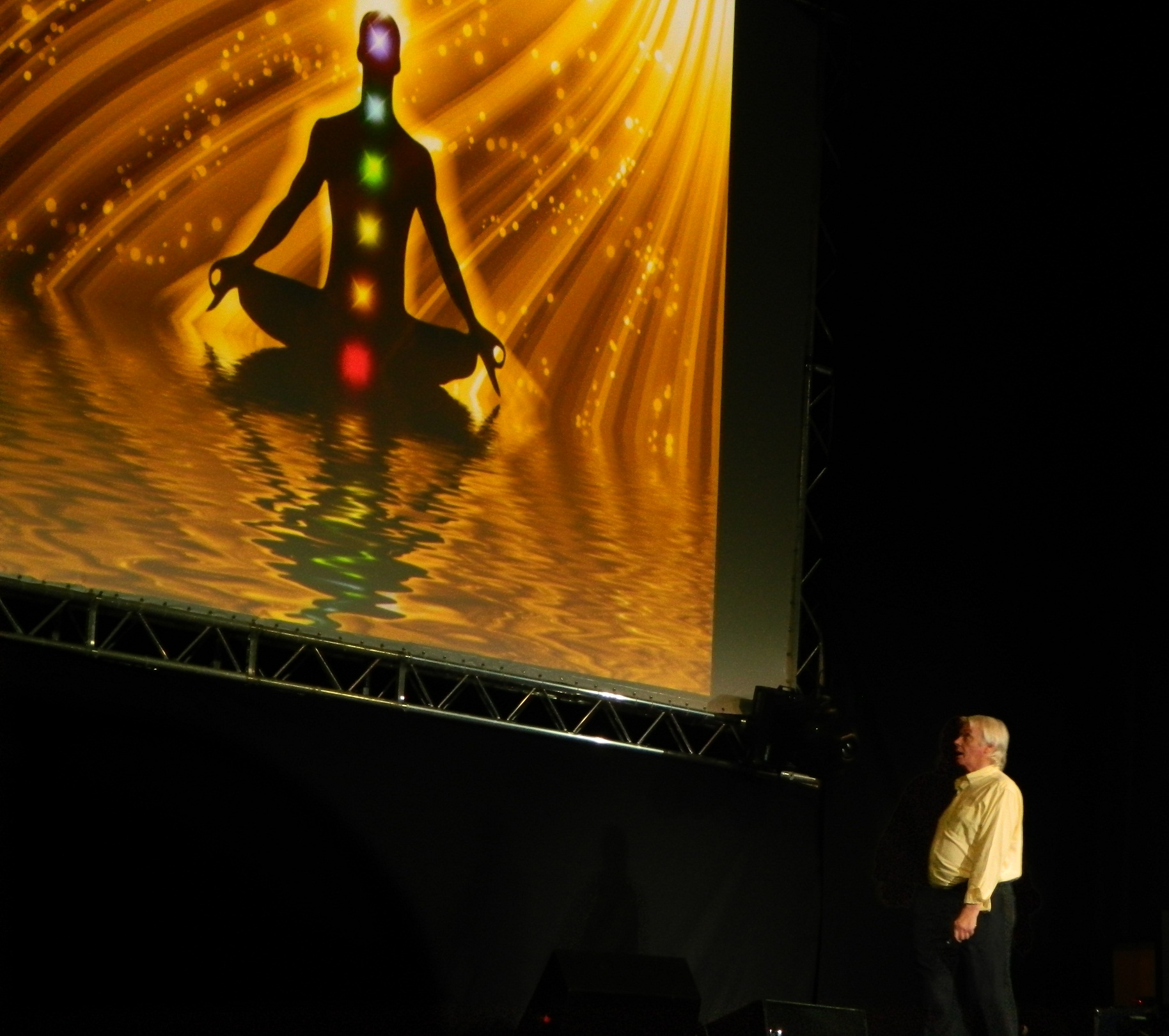
What I found the most surprising was just how little charisma Icke exudes. I had assumed that the event would be slickly produced, well-rehearsed, captivating, and that Icke himself would radiate stage-presence and panache; I was ready for a show. How else could he have gained the reputation and following he has – enough to be able to sell out Wembley Arena? But I saw none of these qualities. Instead, the 10-hour lecture consisted of Icke pacing idly around the stage, improvising a narrative around PowerPoint slides of cobbled-together images and text. He frequently stumbled over words, acted out mocking interactions with Richard ‘Dogma’ Dawkins (replete with funny voices), cracked weak jokes, and flippantly belittled figures such as Albert Einstein by calling them ‘darling’. As evidence for his claims, Icke often referred to popular works of fiction, including The Matrix, Avatar, and George Orwell’s 1984. The talk was occasionally rambling and incoherent, and at times every other word Icke said was ‘bloody’ – bloody media, bloody scientists, bloody politicians, etc. At these points it came across more like the ranting of a drunken Uncle than a presentation by a career orator in a sold out arena.

But I have to admit that throughout the day the audience responded enthusiastically to a lot of what Icke was saying. Especially towards the end of the day, when he was talking about what we can do about the conspiracy, Icke’s passion was obvious and the audience responded with frequent thunderous applause. And this, I think, points towards where Icke’s appeal really lies. It’s not in the coherence of his theories or the professionalism with which he presents them, both of which are sorely lacking. Rather, it’s in the strange sense of assurance he offers: our world may be dominated by conspiracy, but we can take control of the situation. Icke began the day by stating ‘the world is mad, not you’. Throughout the talk he ostensibly divulged privileged knowledge to his audience – what they don’t want you to know. He concluded by offering what sound like empowering ideas: we are all infinite potential; we can fight our oppressors with love; the beginning is here. These platitudes offer little practical utility, but for those who feel alienated and disenfranchised, the sentiment must be appealing.

I think David sincerely believes what he says. I’m not sure exactly how much of it his fans buy in to, but as long as he appeals to people’s longing for a sense of understanding, control, and purpose, I’m sure Icke will continue to find a receptive audience.


David Icke, Wembley Arena 2012

Posted in Reviews | Tagged , , , , , , , , , , | 13 Comments

HIV/AIDS conspiracies and their consequences

As we all know, conspiracy theories are a popular topic. Ask anyone, I’m sure they will have some sort of opinion (pro-conspiracy, or anti) on the topic. And, this is exactly the reason why conspiracies need to be studied, and maybe one-day fully understood. With so many millions endorsing conspiracies, does it have an impact on any of their behaviours, or feelings? Or, instead, are they just harmless bits of fun? 

This is a question that has fascinated me for several years now, and it appears from my own research, and others, that conspiracies are indeed not just harmless fun. This doesn’t appear to be surprising to me. For example, if individuals are believing that those in power, or at least perceived to be, are involved in significant events, then surely this is going to have an impact on whether, let’s say, they want to engage with these powerful figures.

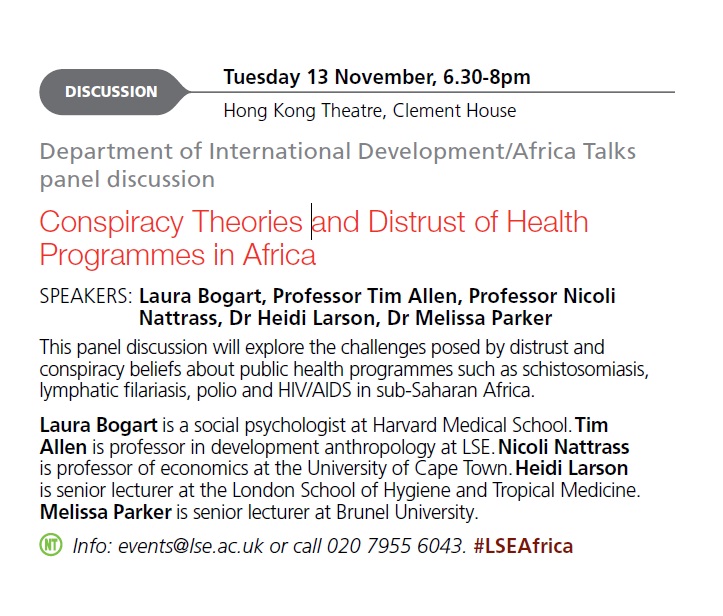
Indeed, this was further supported when I attended a speakers’ event at LSE on Tuesday 13th November. The event was called “Conspiracy theories and distrust in health programmes in Africa”, and the speakers discussed the rise in conspiracy beliefs in Africa concerning HIV/AIDS, and the decline in uptake for medicines, and also condom use. Indeed, conspiracy beliefs were a central reason in this decline regarding usage of medicines, but also confusion was a big issue. For example, the panel provided some example quotes from local residents, from memory they were as follows:

“We need to pay for water; however, these medicines are given out to us for free from the western people. Why are medicines free, but water is not? It surely must be some type of experiment”.

Further:

“We are told that all medicines need to be given to you by a doctor, however, school teachers are giving out tablets to help with a tropical disease. How can teachers give out medicines, it must be something else they are giving us”.

These are interesting statements, and are indeed rational questions to be asking. Coupled with the mistrust in the HIV/AIDS medicines, it can fuel disengagement.  

Furthermore, the LSE event made it increasingly clear the difference between conspiracy theories about governments (e.g., 9/11, Princess Diana) and HIV/AIDS. This was highlighted by a trend in all the talks that suggested it was those in power who actually increased endorsement of these conspiracies. Indeed, if the president of the country believes the conspiracy theories that it was western world who had man-made HIV/AIDS to eliminate blacks (and, further, making using the medicines illegal), this, as you can imagine, increases endorsement of the conspiracy.  This was a really interesting perspective. Moreover, one scholar is starting to develop ways to tackle this using a variety of interventions. She has been looking into Cognitive Behavioural Therapy, amongst other things. She hasn’t got any data on this yet, but her ideas are going in the right direction, as the idea is to get people to talk about HIV/AIDS, and also provide them with the information about how the medicines work, thus limiting their confusion.

Conspiracy theories, and indeed their consequences, are an important area of research. As shown from the LSE event alone, conspiracy beliefs are widespread, and their popularity is growing. They should be taken seriously, by both people on the street, but those in power too. It is not surprising that HIV/AIDS conspiracies are becoming popular when the President of the country is endorsing them.
Posted in Reviews, What's the harm | Tagged , , , , , , , | 5 Comments